

The quick list
- Best for prep7-needle 0,35mm WDT Tool + Stand
This is a distribution tool, not a measuring cup, but it helps improve shot consistency before brewing. Its magnetic stand and standard basket compatibility make it a tidy countertop option.
See moreCheck price on Amazon - Best overallTIMEMORE Basic 2.0 Coffee Scale
This is the most direct pick when you want espresso by weight instead of volume. It adds a timer, flow-rate tools, and a large backlit display for brewing control.
See moreCheck price on Amazon - Best budgetTriple Spout Espresso Shot Glass
This is the simplest low-cost option for reading espresso volume. Its marked increments and heat-resistant borosilicate build make it an easy starter pick.
See more - Best durable setEspresso Shot Glass (Set of 2)
This set is the easiest maintenance-focused pick in the group. It uses hand-blown borosilicate glass and includes a warranty plus free returns.
See more

If you want the best espresso measuring cups for cleaner dosing and easier shot reading, pick the tool that matches how you brew. Brewfolia breaks down practical options, from a marked shot glass to a responsive scale, so you can spend less time guessing and more time making repeatable espresso.
Best espresso measuring cups and dosing picks
The best espresso measuring cups are not always cups. Some help with volume, and some help the shot come out cleaner.
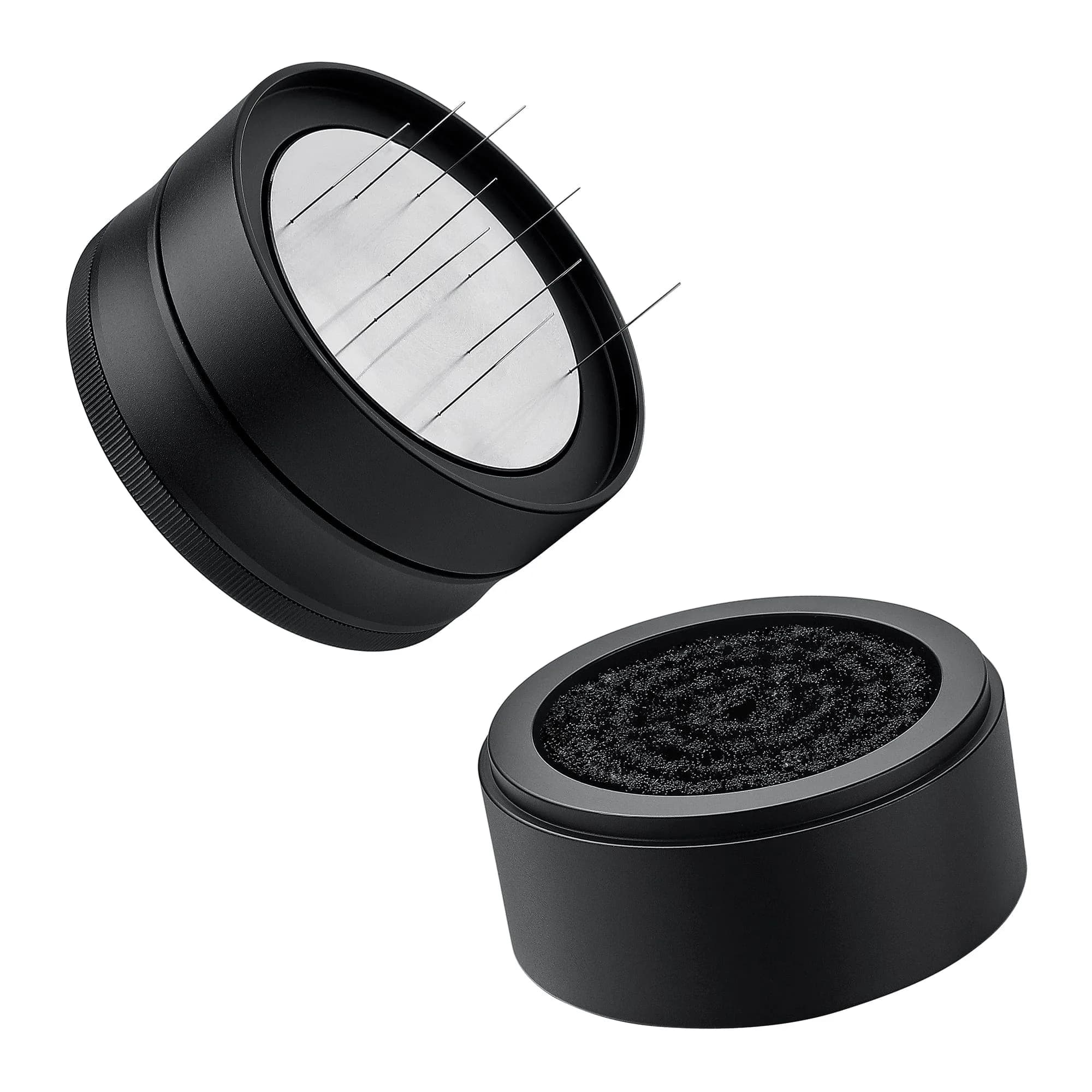
7-needle 0,35mm WDT Tool + Stand
The 7-needle 0,35mm WDT Tool + Stand is not a measuring cup, but it belongs in the same shopping decision. It uses seven 0.35 mm surgical-grade stainless steel needles, a solid hardwood handle, and a food-safe natural oil finish. 7-needle 0,35mm WDT Tool + Stand reviews
The hidden magnets dock the tool into the weighted stand, and the needles fit all standard portafilter basket sizes. Customers repeatedly praise the quality, the stable stand, and the clean look on the counter, while a few say assembly takes a moment. If your goal is more even grounds before the shot, this is the right kind of prep tool.
TIMEMORE Basic 2.0 Coffee Scale
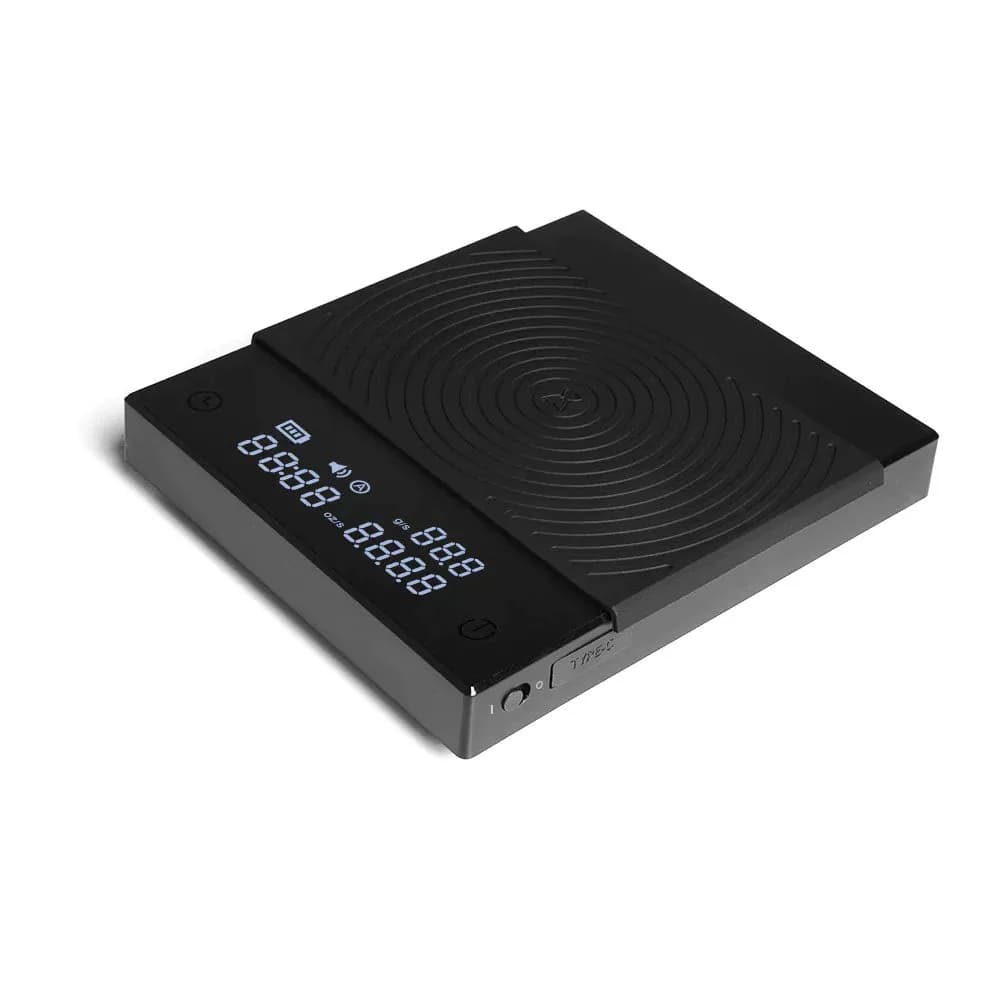
The TIMEMORE Basic 2.0 Coffee Scale is the most direct answer when the goal is weight, not volume. It measures from 0.1 g up to 2 kg, detects down to 0.5 g, and uses a 1600mAh rechargeable lithium battery with up to 10 hours of runtime. TIMEMORE Basic 2.0 Coffee Scale reviews
It has a large backlit LCD screen, intuitive touch buttons, grams and ounces, a waterproof dial surface, and a silicone waterproof insulation pad. Timemore customer comments repeatedly describe it as easy to use and accurate, and the scale also includes an automatic timer and water flow rate test function. If your routine already uses a cup, this scale gives you the number behind the pour.
Best espresso shot glass for scale
When shoppers search for the best espresso shot glass for scale, they usually want clear walls, readable marks, and a shape that stays steady on the counter. A triple-spout espresso shot glass listed at $11 checks those basics with thick-walled borosilicate heat-resistant glass, 66 mm width, 62 mm height, and markings in 1/2 oz and 10 ml increments.
The smaller opening can feel tight under a spouted portafilter, and customer comments on the product page say the printed text can wash off in a dishwasher. A hand-blown borosilicate set of 2 listed at $26.50 offers dishwasher-safe cleanup, a 1-year warranty, and free returns, so it suits readers who want a cup that is easier to maintain.
Espresso shot cup ml markings
Espresso shot cup ml markings matter because they keep you from guessing while the shot is flowing. The triple-spout glass uses 10 ml increments, which is simple to read at a glance, and the 1/2 oz scale gives a second reference if you switch between metric and imperial.
If the print is faint or the numbers are too small, the cup stops being useful. For clear dosing, choose marks you can read quickly in real light, not just in a product photo. That is especially helpful when you pair the cup with a scale and want the numbers to agree.
How to choose the right espresso measuring cup
Volume and weight solve different parts of the same job. The right cup feels obvious in use, not clever on paper.
What makes a good espresso shot glass?
A good espresso shot glass is easy to read, stable, and made from glass that can handle hot liquid. Borosilicate is a strong fit here. One option is dishwasher safe, while another uses thick walls and a heat-resistant build that feels durable on the counter.
Look for clear marks, enough width to catch the stream, and a shape that does not force you to hover awkwardly over the tray. The best espresso measuring cups keep the shot visible without making the pour more complicated.
Choose the right size for single and double shots
Size matters because a cup that is too tight becomes frustrating fast. The 66 mm by 62 mm shot glass gives a concrete reference point, and reviewers note that an opening can feel small under a spouted portafilter.
For single and double shots, the goal is room to catch the flow without splashback. If the cup sits securely and leaves enough space to read the marks, you are far less likely to tilt, rush, or miss the target.
Read markings in ml and ounces without guessing
The easiest markings to use are the ones that stay visible when the cup is moving. 10 ml increments are straightforward, and a 1/2 oz scale gives a second reference if you switch between metric and imperial.
You do not need a complicated chart when the marks are clean and the glass is transparent. That is why the best espresso measuring cups usually favor simple numbering over decorative printing.
Pick materials that fit your cleaning routine
Materials affect how long the cup stays readable. Dishwasher-safe glass is convenient, but a page note says printed text can wash off over time, so hand washing may protect the markings.
Borosilicate glass is a practical middle ground because it handles heat well and stays clear. If you want low-maintenance cleanup, compare how much print, finish, or special coating the cup relies on before you buy.
Match the price to how often you brew
A daily brewer usually cares more about speed and clarity than about a low sticker price. The listed shot glasses sit at $11 and $26.50, while the scale is listed at $55 for black and $59 for white, so the budget spread is wide.
If you brew often, a durable cup or a fast scale can be worth more than a bargain choice that becomes annoying. If you brew once in a while, keep the setup simple and buy only the tool that solves your biggest problem.
Mistakes to avoid when measuring espresso
Even the best espresso measuring cups can feel wrong if the shape or markings work against you. Most mistakes come from fit, visibility, and using the wrong tool for the job.
Using a cup that is too narrow for your portafilter
A narrow opening makes the pour harder to control and can crowd the stream. That is why one product note about the shot glass mentions the opening feeling a bit small under a spouted portafilter.
Check width before you buy. If the lip does not leave enough room for the shot to land cleanly, you will spend more time adjusting the cup than reading it.
Trusting faded markings or hard-to-read scales
Faded print is a bigger problem than many shoppers expect. If the marking washes off, or the display is hard to read because the buttons are too sensitive or the timer fires from vibration, the tool slows you down instead of helping.
Choose a cup with clear marks and a scale with a screen you can read in real light. A backlit LCD helps, and so does a simple layout that does not ask for guesswork.
Buying a shot tool when you need a measuring cup
This is the easiest mistake to avoid. The 7-needle 0,35mm WDT Tool + Stand is built to break up clumps and spread grounds evenly, not to catch liquid or show volume.
If you need shot volume, buy a cup. If you need distribution, buy the tool. When you need both, the smartest setup separates the two jobs and keeps each part simple.
Choose the tool that matches your espresso routine
The best espresso measuring cups are the ones that make your routine faster, clearer, and easier to repeat. A marked shot glass handles volume, a scale handles weight, and a WDT tool handles prep. If you are still deciding, read the full Brewfolia review pages before you buy and match the tool to the way you actually brew.
1. 7-needle 0,35mm WDT Tool + Stand
This is a distribution tool, not a measuring cup, but it helps improve shot consistency before brewing. Its magnetic stand and standard basket compatibility make it a tidy countertop option.
Specifications
- Needles
- 7 × 0.35mm
- Needle material
- Surgical-grade stainless steel
- Handle material
- Solid hardwood
- Finish
- Food-safe natural oil finish
- Docking system
- Hidden magnets
- Stand
- Magnetic weighted stand
Where to buy
Reasons to buy
- Seven 0.35mm needles for clump breakup.
- Hidden magnets dock the tool securely.
- Fits all standard portafilter basket sizes.
Reasons to avoid
- Not a measuring cup.
- Assembly can take a moment.
2. TIMEMORE Basic 2.0 Coffee Scale
This is the most direct pick when you want espresso by weight instead of volume. It adds a timer, flow-rate tools, and a large backlit display for brewing control.
Specifications
- Measurement range
- 0.1g up to 2kg
- Minimum detection weight
- 0.5g
- Battery
- 1600mAh rechargeable lithium battery
- Runtime
- up to 10 hours
- Material
- high-quality acrylic
- Display
- large backlit LCD screen
Where to buy
Reasons to buy
- Measures from 0.1g up to 2kg.
- Rechargeable battery with up to 10 hours runtime.
- Large backlit LCD screen.
- Supports grams and ounces.
Reasons to avoid
- Touch buttons may feel less tactile.
- Auto shutdown after 3 minutes of inactivity.
3. Triple Spout Espresso Shot Glass
This is the simplest low-cost option for reading espresso volume. Its marked increments and heat-resistant borosilicate build make it an easy starter pick.
Specifications
- Size
- 66 mm wide by 62 mm high
- Material
- clear thick-walled borosilicate heat-resistant glass
- Markings
- 1/2 oz and 10 ml increments
- Warranty
- 12-month general warranty on workmanship and materials
Reasons to buy
- Marked in 1/2 oz and 10 ml increments.
- Thick-walled borosilicate heat-resistant glass.
- Compact size for counter use.
Reasons to avoid
- Printed text can wash off in a dishwasher.
- Opening may feel a bit small.
4. Espresso Shot Glass (Set of 2)
This set is the easiest maintenance-focused pick in the group. It uses hand-blown borosilicate glass and includes a warranty plus free returns.
Specifications
- Material
- hand-blown borosilicate glass
- Warranty
- 1-year warranty
- Return policy
- satisfied-or-refunded promise and free returns
Reasons to buy
- Hand-blown borosilicate glass.
- Dishwasher safe.
- Includes a 1-year warranty.
- Free returns included.
Reasons to avoid
- Set size may be more than some buyers need.
Espresso measuring cup questions shoppers ask
- Should I use a shot glass or a scale for espresso?
- Use a scale for accuracy and a shot glass for visual tracking. Many espresso routines use both, because the cup shows the pour while the scale confirms the dose.
- What’s the difference between a dosing cup and a shot glass?
- A dosing cup holds grounds before brewing. A shot glass catches the espresso after extraction. One is for prep, the other is for the finished shot.
- How many ml should an espresso shot cup hold?
- There is no single number that fits every setup here. Choose a cup with clear espresso shot cup ml markings and enough room for your shot, then match it to your portafilter and brew style.
- Can one measuring cup work for both dosing and shots?
- Yes, sometimes. A marked cup can help with both dosing and shot reading if it is wide enough and easy to read, but a WDT tool and a scale still do different jobs.
- Do I need heat-resistant glass for espresso shots?
- Heat-resistant glass is a smart choice because espresso is hot and the cup should stay stable and easy to handle. Borosilicate is a practical option for that reason.


